How to get people to actually RSVP
The short answer: make answering take one tap, ask once with a real date attached, and then chase the specific people who did not answer instead of sending another message to everyone.
Most non-response is not rudeness. It is friction. Every extra step between “I got the invitation” and “I have answered it” loses people, and most invitations have four or five steps in them without the host noticing.
Why people do not answer
Answering costs more than it looks like it does. If your invitation asks someone to install an app, make an account, or remember a password, you have asked them to do a chore for your party. A meaningful share of them will decide to do it later, and later does not arrive.
They do not know yet. Three weeks out, a lot of people honestly do not know if they are free. In a group chat, “I don’t know yet” feels like a worse answer than saying nothing, so they say nothing. You have to make “not sure” a real option or you will get silence instead.
The ask was buried. In a group thread, your question is four messages from the top by the time most people look. They read it, thought “yes, I’ll reply properly later,” and the thread moved.
There was no deadline, so there was no moment. An open ended question has no point at which it is due. It just sits there.
The method
1. Make answering one tap, in a browser
This matters more than everything else on this list combined. The person should open a link, see three choices, tap one, and be done. No install, no account, no password, no form asking for their address and their meal preference before they can say yes.
If your invitation requires an app, expect a large share of the people who genuinely want to come to simply not respond. They are not saying no. They just have not done the chore.
If one celebration has several parts, keep the same easy answer pattern for each plan. A guest can say yes to dinner, maybe to the workshop, and no to brunch without squeezing the whole weekend into one misleading response.
2. Ask once, in the place they already are
Send the link where you normally talk to these people. The group chat, one to one, wherever. Do not spread the same invitation across four channels, because then nobody knows which one counts and you cannot tell who has actually answered.
Send a personal link to the eight people whose answer you genuinely need, and a group link to everyone else. Those are two different jobs. The personal ones are for people whose absence would change the plan.
3. Put a real date on it
Not “let me know soon.” A date, and the reason for it.
Any date works as long as it is real and you can say why. People respond to a reason far better than to a request.
4. Make “not sure” an option
If the only buttons are yes and no, everyone who does not know yet picks nothing, and you cannot tell them apart from the people who never saw it. Give them a maybe. A maybe is information. Silence is not.
Then, closer in, go back to the maybes specifically and ask them to land on one. That is a much easier conversation than chasing a silent list.
5. Chase individuals, never the group
Three days after your deadline, do not post “hey everyone, please RSVP” into the group chat. Everyone who already answered reads it, feels vaguely nagged, and the four people you actually need do not notice it any more than they noticed the first one.
Message those four people directly. One line each.
Hey, doing a headcount for Saturday and I have not heard from you. Yes or no is fine, no explanation needed.
The phrase “no explanation needed” does real work. A lot of silence is people who cannot come and are avoiding writing the paragraph they think is required.
Wording you can copy
The invitation:
Emma’s birthday, Saturday the 14th, 6pm, our place. Tap the link to say yes, no, or maybe. Takes a second and it tells me how much food to buy.
The deadline:
Ordering food Wednesday morning, so I need answers by Tuesday night. After that I am cooking for whoever said yes.
The one to one chase:
Hi, still doing the count for Saturday. Yes or no is fine, no explanation needed.
The maybe conversion, two days out:
Hey, you said maybe for Saturday. Any clearer? Either answer is completely fine, I just need the number.
Reading the answers you get
A yes is not attendance. Plan with that.
These are planning rules of thumb, not measurements. Keep your own record over a few events and yours will beat any general figure.
- Casual, free, local, weeknight: expect around 15 to 20 percent of yeses not to turn up. Life happens and there is no cost to not coming.
- Casual but on a weekend, with food you clearly cooked: more like 10 percent.
- Anything ticketed, seated, or with a named place setting: usually under 5 percent, because people feel the commitment.
- A large open invitation to a loose list: can be 30 percent or worse. The bigger and looser the list, the softer the yes.
For non-responders, plan as though they are not coming, but do not be shocked when one or two appear at a casual event. If four people never answered, having a bit of extra food for one of them is cheaper than the alternative.
The one that catches people out: a yes to the old plan is not a yes to the new one. If you move the time, the date, or the place, every previous yes becomes a guess. Ask again. That is its own problem and it has its own post.
The uncomfortable part
If you do all of this and people still do not answer, the honest read is usually that they do not want to say no. That is worth knowing three days early rather than on the day. Plan for the number who said yes, be pleased if more come, and do not build the evening around anyone who has been quiet for two weeks.
Where Madali fits
This is the problem Madali was built around, so here is the honest version.
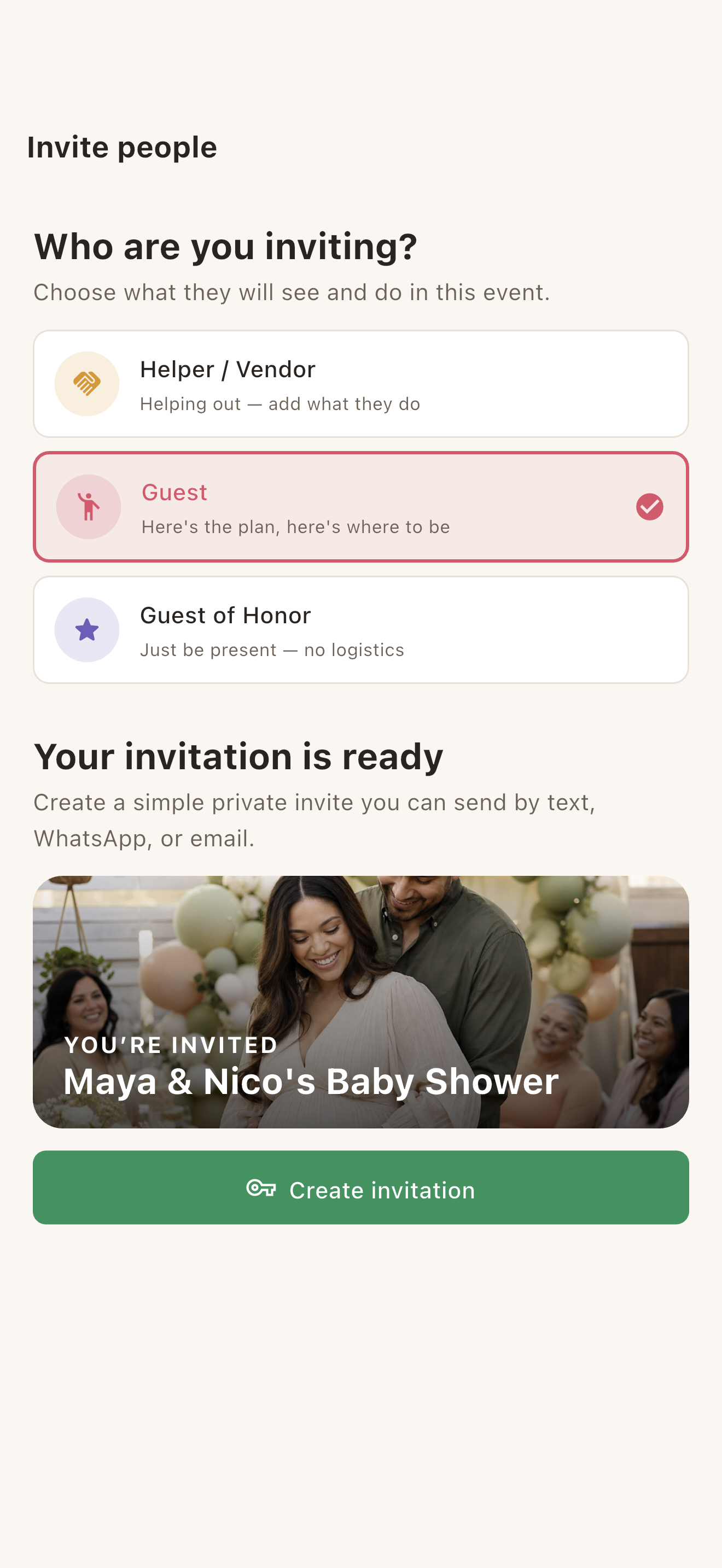
A guest taps your link, answers going, maybe, or not going in whatever browser they already have, and is finished. No app, no account, nothing to install. You can send one link to a group chat or a personal link to one person, and you see who is going, who is unsure, and who never answered. Before the day you can ask for one confirmation with a real due time, which is the “convert the maybes” step above, done for you.
For an ordinary invitation, Madali makes the links and you share them in the group chat or wherever you already talk to people. Madali does not send SMS. Scheduled Circle email is separate: the host must offer it, and each named guest must choose it from a private invitation. Guests never see who else responded, so nobody is deciding based on who else said yes.
Free covers one celebration at a time, with the full guest list and invitations. Madali is available on the App Store and Google Play.